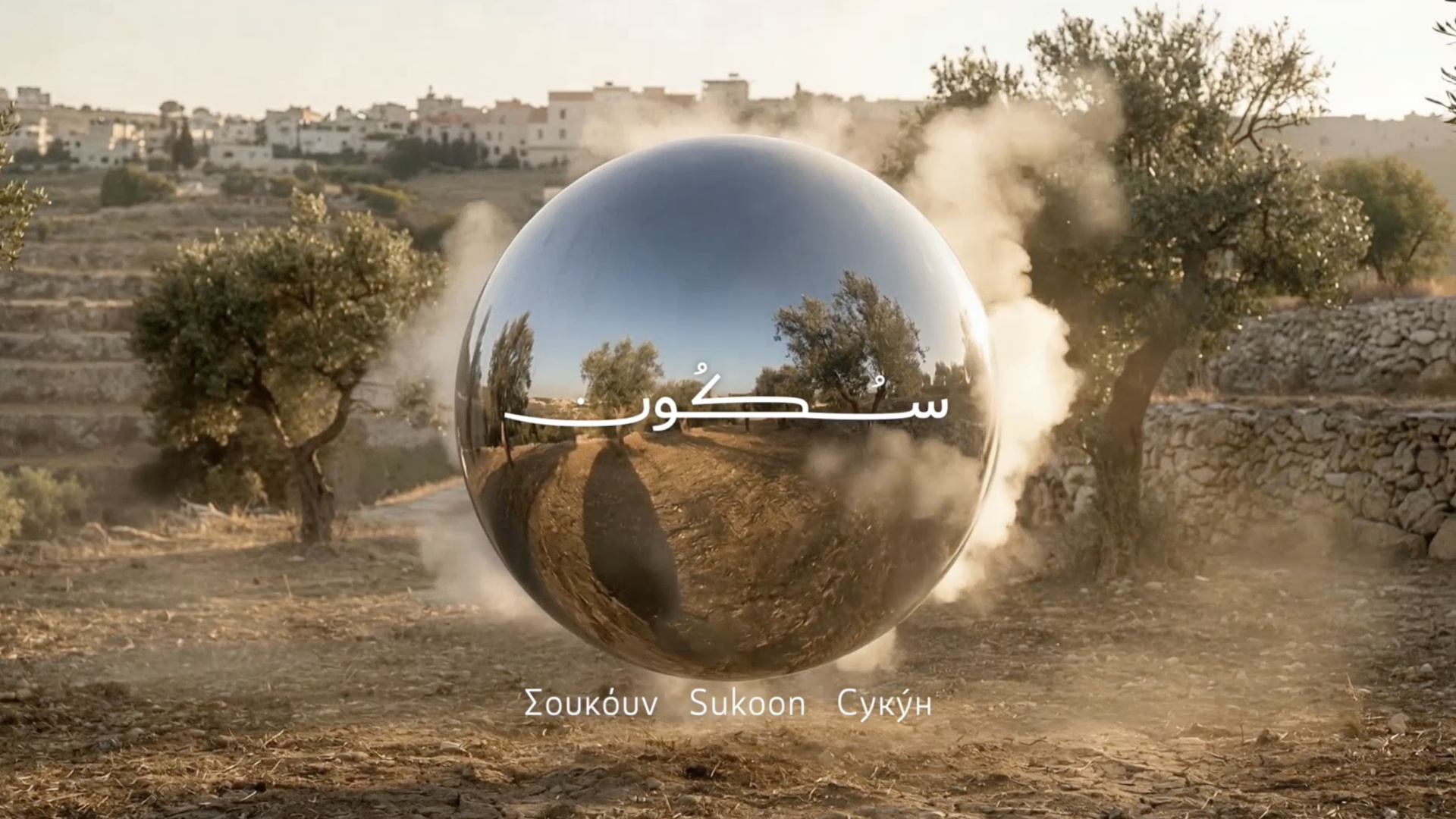
Can a typeface embody a sensation? We believe it can! Introducing Sukoon, the latest addition to our library and the culmination of a ten year project that all started with one quiet moment of contemplation. Read all about Sukoon’s origin and see it in its full glory below. Also in this edition, take a peek behind the scenes of our Neue DIN video, Tausend headlines in our latest use case, we also have some good award news and we’re raising a glass to our friend and mentor Erik Spiekermann! |
|
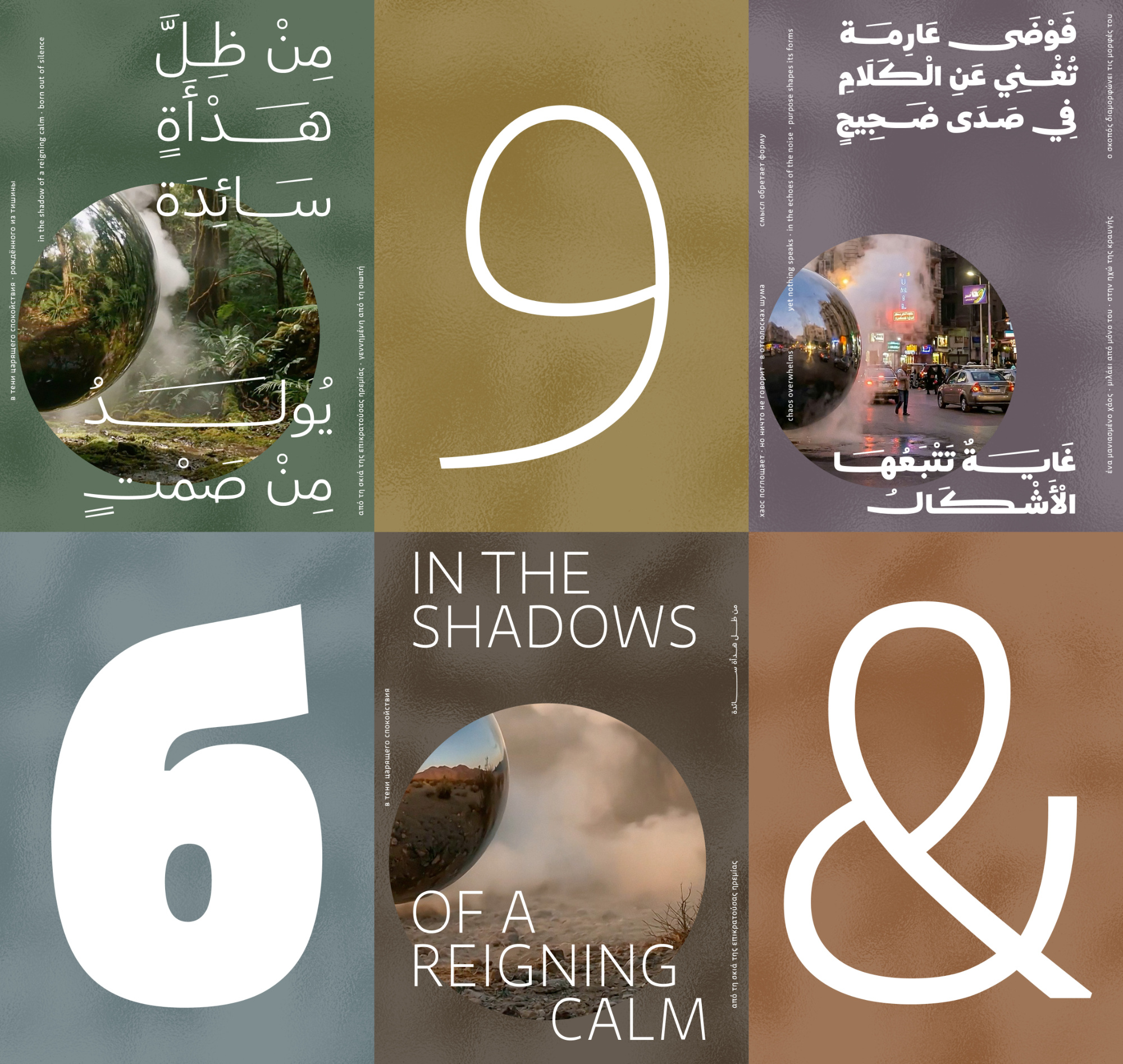 | | Sukoon includes over 400 Latin, Arabic, Cyrillic and Greek languages, with the name itself hinting at a focus on Arabic. | |
|
| | The aesthetics of tranquility and clarity: typography as sensationIt started with a single letter, one drawn during a moment of inner peace. There was no concept, no goal in mind, just one small moment of tranquility. The designer and artist Jan Gerner, better known as Yanone, describes the state of deep relaxation and mental clarity he experienced in a remote forest cabin as almost sacred. In that moment, he had not created a form, but had found it. It wasn’t a finished idea or full alphabet – just a feeling that would evolve over the next decade. Fast forward to the present day and that single letter has transformed into a fully fledged typeface, one that can travel across cultures and support hundreds of languages. Sukoon is the name of the sensation Yanone felt and the newest edition to our library. The word is understood in Arabic, Persian, Turkish and Urdu; it has also been borrowed into Hindi and other Indian languages. In Southeast Asia, it refers to the breadfruit tree, a symbol of frugality, gratitude, deep connection with nature, and community cohesion. In Arabic, the diacritical mark ‘sukūn’ also describes a state of calm. Sukoon embodies everything this typeface represents: silence, clarity, tranquility, inner peace. Its unique character communicates across languages through its form, rhythm and restraint. Sukoon asserts itself not through force, but through balance. Taking up space without filling it. Speaking without shouting. It can be characterized as a dynamic or humanistic sans serif font. Thanks to its more open and clearly distinguishable letterforms (e.g., double-story ‘g’) and and its humanistic contrast axis, this style is considered the most legible in the sans serif genre, making it increasingly important in light of growing demands for accessibility. Sukoon is also one of the reasons why we introduced Regional Pricing, as the font is primarily intended for countries where Arabic is spoken and the font itself speaks over 400 Latin, Arabic, Cyrillic and Greek languages. Unlike other Arabic speaking fonts, Sukoon offers an array of stroke weights and features whilst still maintaining a sense of elegance and visual calm. Arising from a moment of silence and contemplation, Sukoon is typography as sensation. If you look closely, you may sense a little of the clarity, beauty and tranquility from which it was born. | |
|
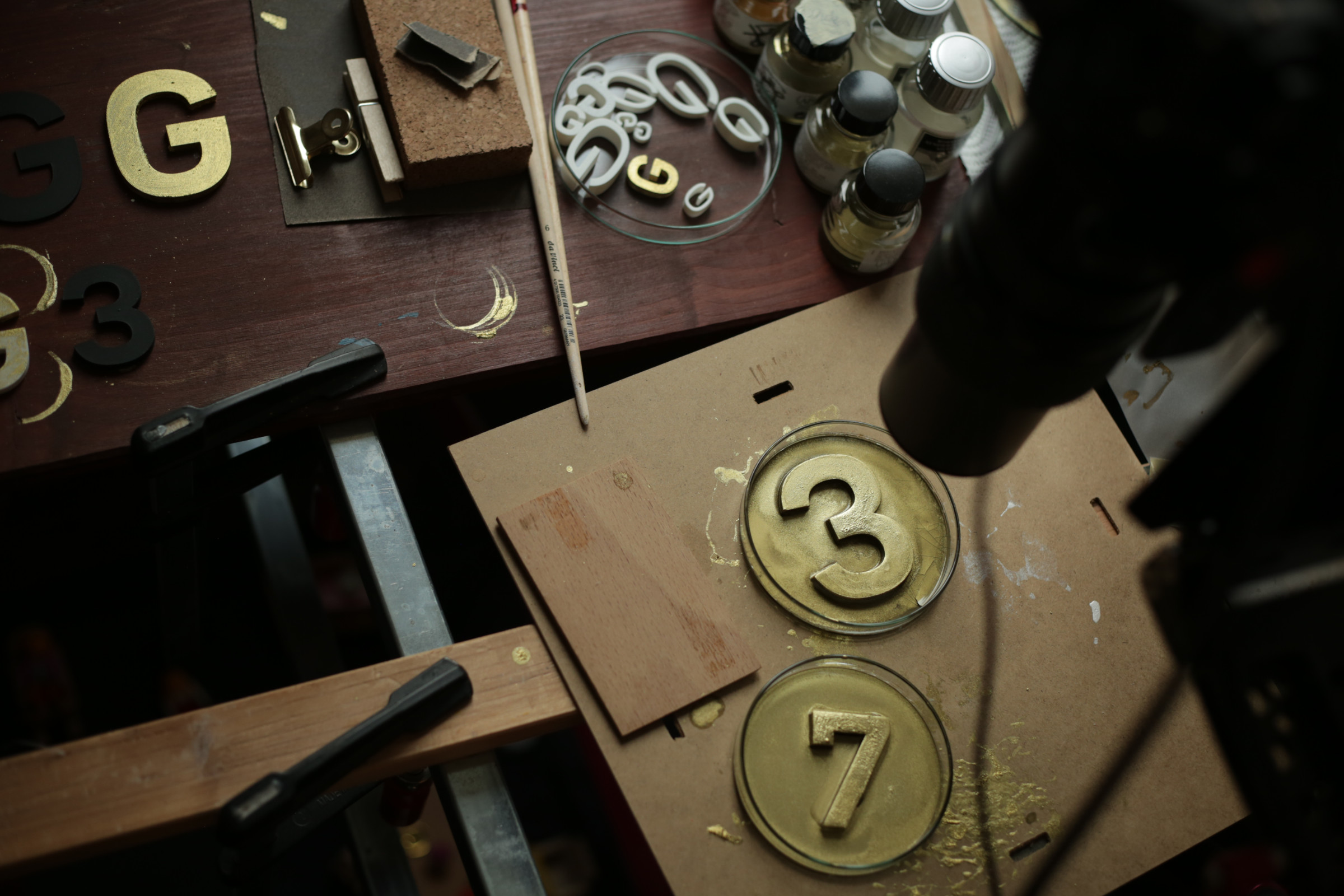 | | Photos from Susi Sie’s studio: 3D-printed letters with gold paint – only that had the desired consistency and look | |
|
| | Behind the Scenes of the Neue DIN VideoWe love the handmade touch, not only in our typefaces, but also in our campaigns and visuals. The tactile aspect has a particular appeal when elaborately created details appear artificial and only become apparent that they are in fact handmade at second glance. Alongside our videos for the color font, Hamster (with SNASK) and the Case Collection (with Susi Sie), the recently released Neue DIN video falls into this category. The idea behind the video was to explore the origins of the typeface used on German street signs through an asphalt-inspired aesthetic, while remaining abstract and timeless. To achieve this, we collaborated again with Susi Sie, who now offers us a brief glimpse behind the scenes. Her work takes place exclusively in the analog world. She uses film, macro techniques, and physical materials to reveal details that normally remain hidden. Based in Zurich, Susi Sie is an Emmy award-winning artist, having won one for ‘A Trip to Infinity’ (Netflix). For Neue DIN, she recreated the appearance and texture of stones and particles using gold paint. She poured the paint into Petri dishes allowing it to flow freely, as it did so the liquid slowly formed miniature landscapes. The paint moves playfully around the letters, circling them, touching their edges, and leaving them room to breathe. The result is a unique film. One that is magical, delicate and yet rich in detail. Throughout the film there is a silent dialogue between type, material, and the beauty hidden beneath the surface. The whole process was in fact incredibly exciting and inspiring for us as well. | |
|
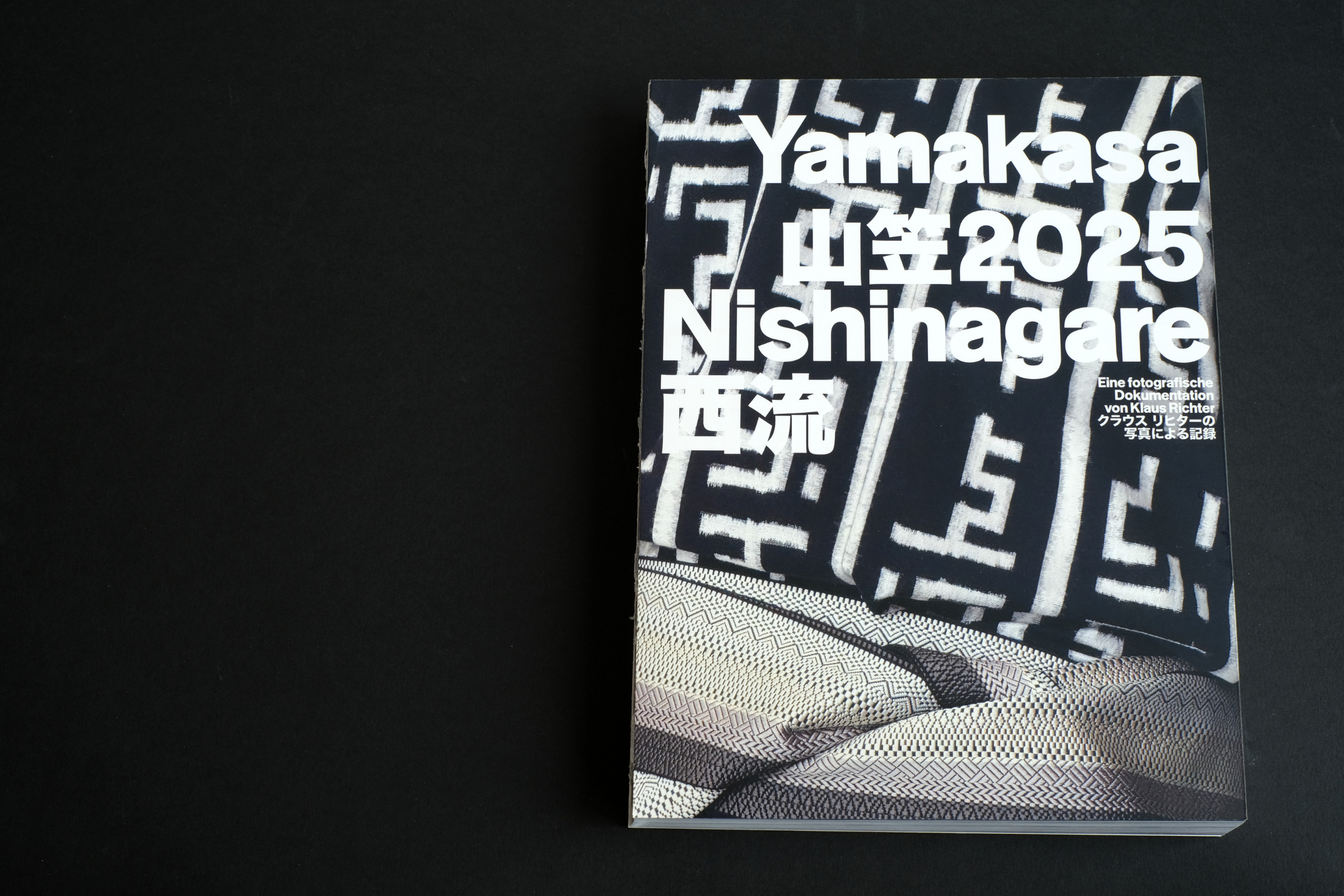 | | The photographic documentary “Yamakasa” takes a look behind the scenes of the spectacular Hakata Gion Yamakasa Festival. | |
|
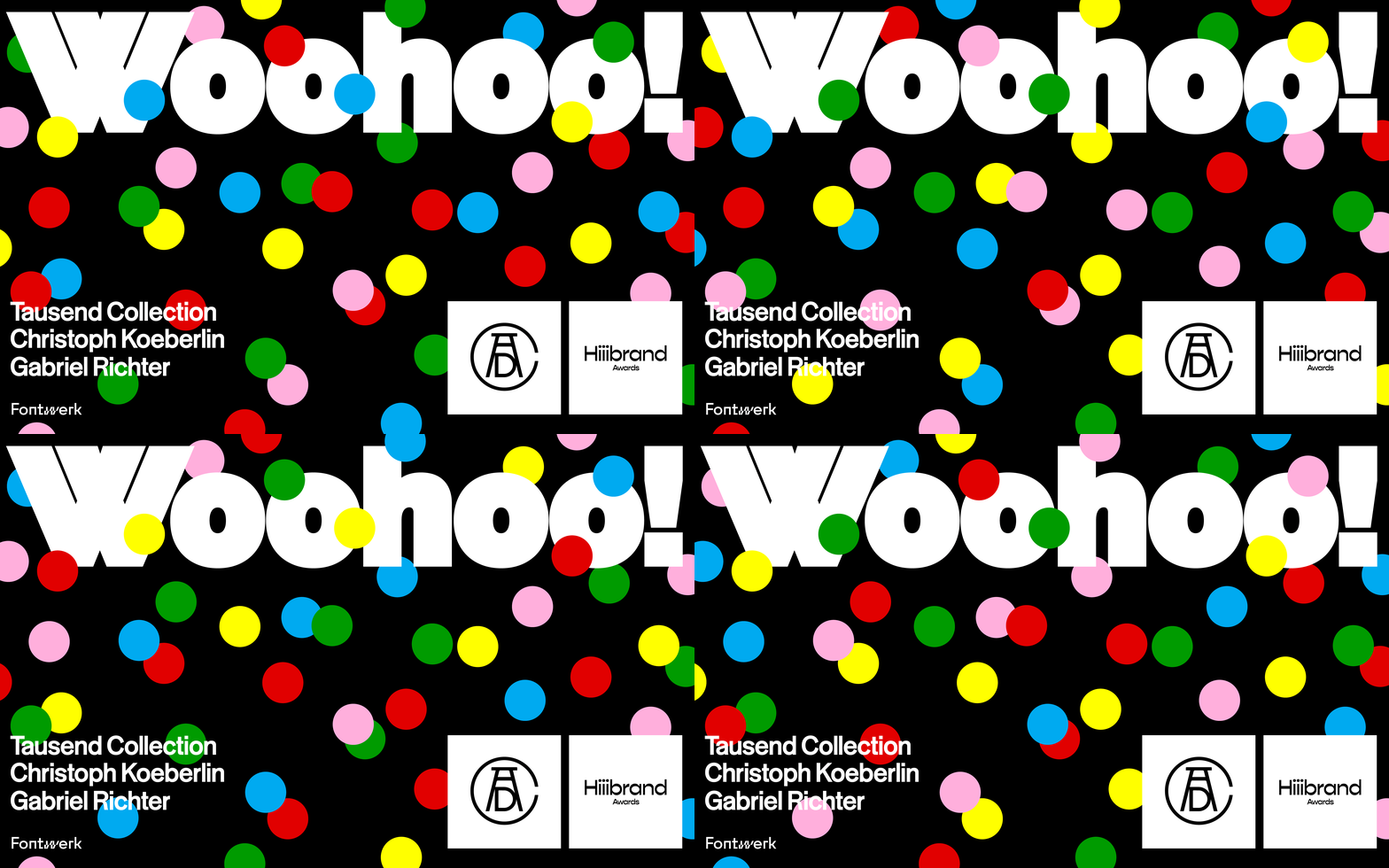
| | Tausend in use: a font ‘spectacle’Klaus Richter’s 300-page photographic documentary “Yamakasa” takes a rare peek behind the scenes of the spectacular Hakata Gion Yamakasa Festival in the Japanese city of Fukuoka. The festival dates back to 1241 and is steeped in ritual and tradition. Every year, seven groups of men parade through the old town with their magnificent Yamakasas: richly decorated wooden frames and floats that weigh over a ton. Back in 2025, Klaus was given exclusive permission to accompany one of the teams during the festivities. His photographs document not only the procession itself, but also the behind the scenes, showing the pulse of a community celebrating its traditions. Throughout the book, the font Tausend, designed by Christoph Koeberlin and Klaus’s son, Gabriel Richter plays a central role. Tausend’s compactness and slightly slanted ends correspond strongly with the structure of Japanese kanji and their dynamic strokes. Tightly spaced letters create a feeling of density and cohesion, as exemplified by the groups of men carrying their palanquin. Combined with the Japanese font Hiragino Sans from Screen Graphic Solutions, this typographic combo creates a captivating typographic dialogue, without striking effects or cultural simplifications. The headlines and texts move across the pages like the Yamakasa carriers through the city. The open thread stitching is not just an aesthetic detail, but a deliberate reference to the ropes and cords that hold the Yamakasas together. Yamakasa is a book about community, trust, and movement and Tausend is woven in as part of the narrative: powerful, compact, rhythmic. The project exemplifies how typography can bridge the gap between form and content. | |
|
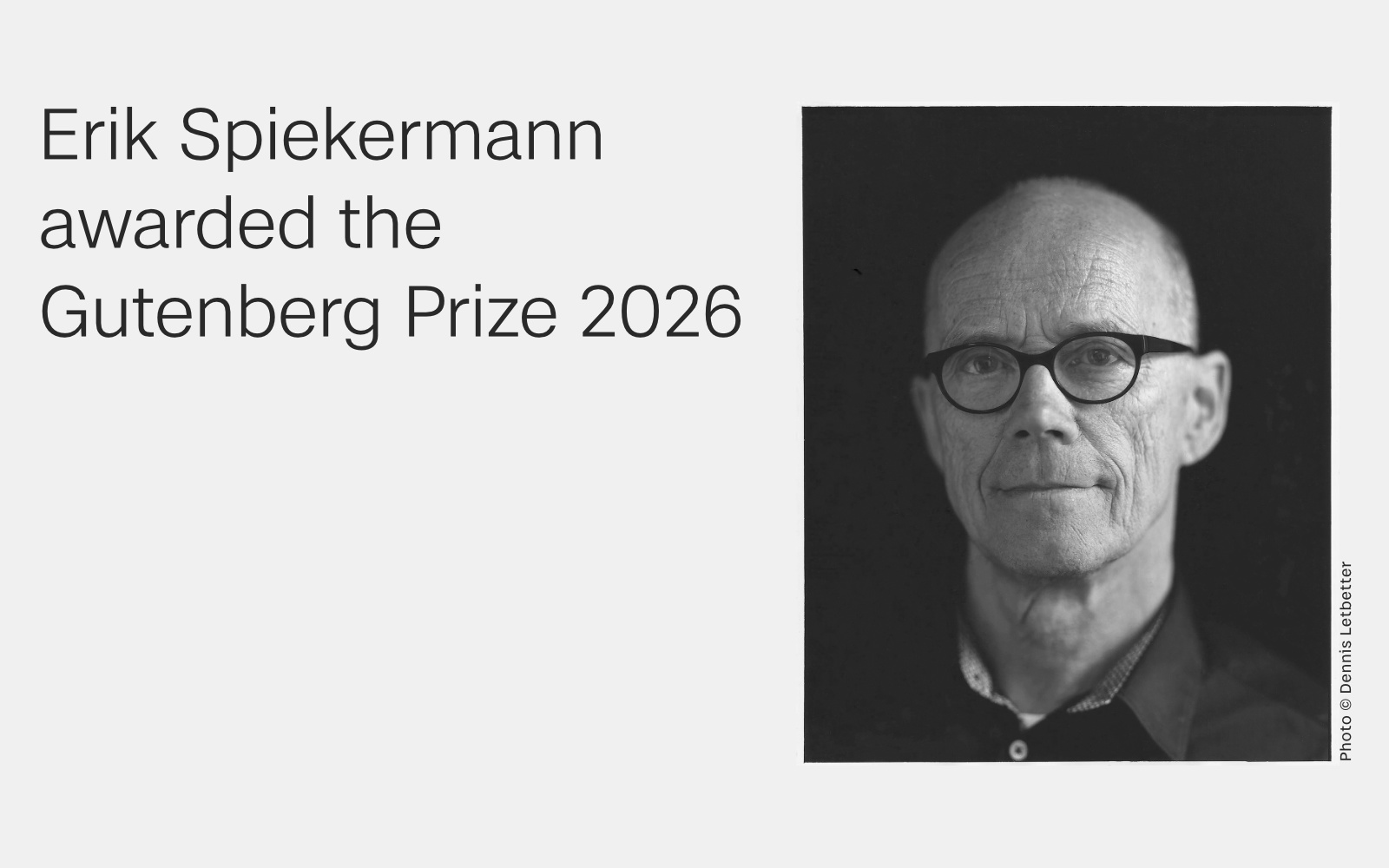 Our friend, mentor and co-designer of Case, Erik Spiekermann is to receive the revered and highly coveted Gutenberg Prize, awarded by the International Gutenberg Society and the City of Mainz. Since 1968, the prize recognizes outstanding artistic, technical, and scientific achievements in the field of printing. This year’s jury remarked on Erik’s pioneering and innovative approach to his work and the wealth of inspiration that he provides to new generations of type designers. Herzlichen Glückwunsch, Erik! ↗ |
|
Many people feel that social media no longer works for them (and we kinda agree with them!). It’s probably one of the reasons why there’s a noticeable trend and return to personal websites and blogs. With this development, RSS readers are also making a comeback. If you prefer to consume your content this way, then do check out our RSS feeds. Our main feed contains all the latest articles and stories from our blog, while our font feed features our most recent font releases. |
|
|
|